
Published: October 10, 2025 | Last Updated: September 17, 2026
Walking canes may appear to be relatively simple mobility products, but sourcing them for wholesale distribution requires more than comparing price and appearance.
For medical equipment distributors, healthcare brands, wholesalers, rehabilitation equipment suppliers, and project buyers, the differences between walking canes can affect product positioning, transportation costs, long-term durability, user experience, and after-sales requirements.
Materials, tube construction, height adjustment mechanisms, handles, cane tips, packaging, and production consistency should all be evaluated before placing a bulk order.
As a rehabilitation equipment manufacturer, KDB Medical works with global B2B buyers sourcing mobility and homecare products for different markets. This guide explains the key factors buyers should consider when selecting walking canes and evaluating a walking cane manufacturer for long-term cooperation.
1. What Should B2B Buyers Evaluate When Sourcing Walking Canes?
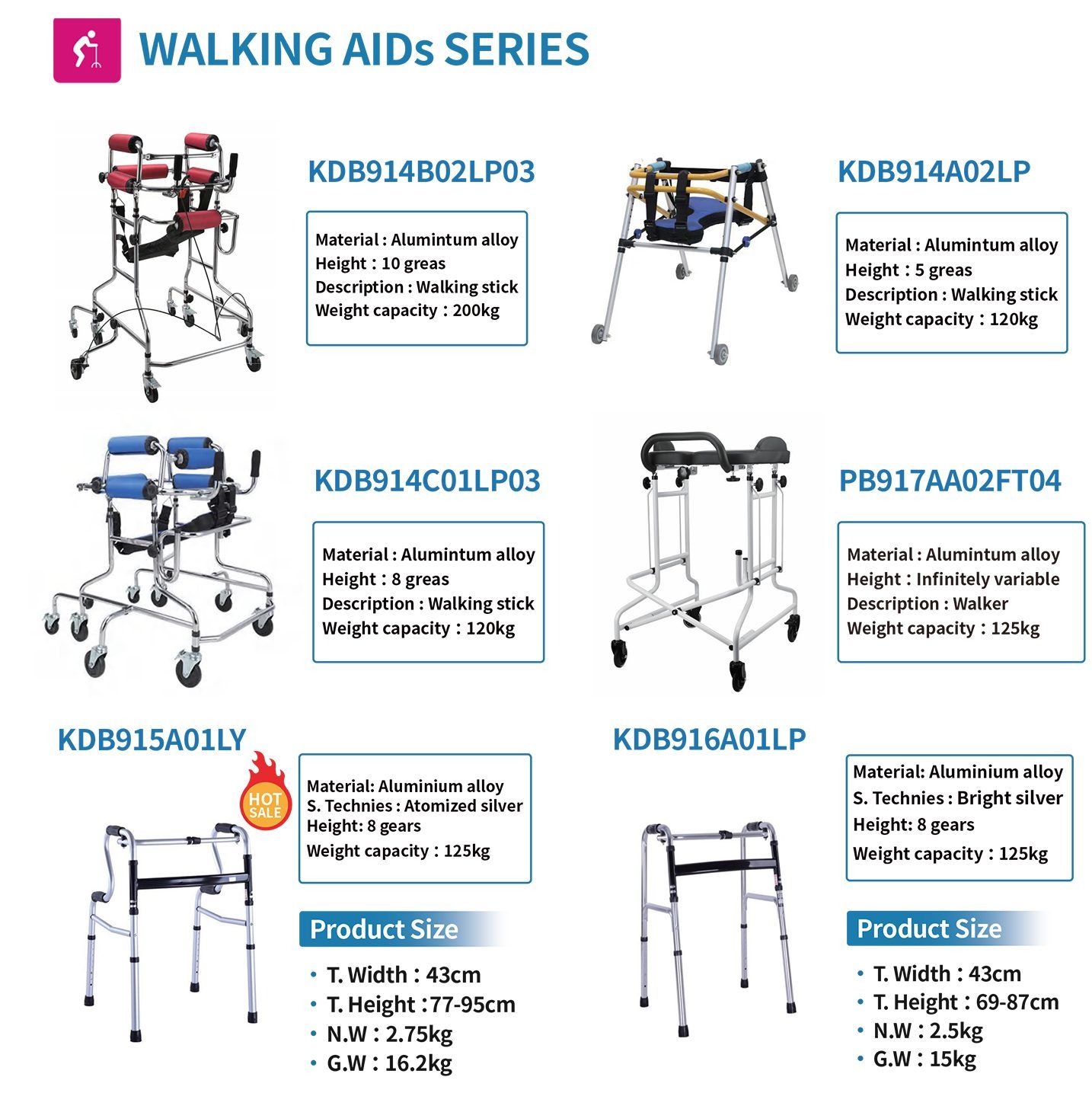
Consumer buyers usually choose a walking cane according to personal comfort, appearance, and price. Professional buyers need to consider the product from a broader commercial perspective.
Before selecting a walking cane supplier, distributors should evaluate:
- Product types available
- Frame material and tube construction
- Height adjustment design
- Locking mechanism
- Handle and grip design
- Cane tip stability
- Product consistency between batches
- Packaging configuration
- Branding and private label options
- Sample availability
- Bulk production capability
- Quality control procedures
- Long-term supply capability
The right product specification also depends on where and how the walking cane will be sold.
A pharmacy chain, rehabilitation equipment distributor, healthcare brand, institutional supplier, and e-commerce seller may require very different product configurations and packaging.
2. Walking Cane Types for Different Distribution Markets
A strong walking cane portfolio does not necessarily mean carrying as many models as possible.
Distributors should instead build a product mix that covers the major price points, user requirements, and sales channels in their target market.
Depending on the product range, common categories may include:
Adjustable Walking Canes
Height-adjustable models allow distributors to cover a wider range of users with fewer SKUs.
When evaluating an adjustable walking cane, buyers should examine not only the adjustment range but also the hole positioning, locking mechanism, tube fit, and stability after adjustment.
Folding Walking Canes
Folding designs are particularly relevant where portability, compact packaging, storage, or e-commerce distribution matters.
For bulk buyers, the folding structure should be evaluated repeatedly to determine whether the joints remain stable after regular use.
Quad Canes
Quad canes use a multi-point base to provide additional ground contact.
Buyers sourcing this category should pay particular attention to the base construction, connection between the shaft and base, cane tip quality, and overall stability.
Standard Walking Canes
Standard walking canes remain important for distributors seeking straightforward, cost-efficient mobility products.
For these models, manufacturing consistency, materials, handle quality, surface finishing, and packaging efficiency can have a significant impact on the competitiveness of a bulk program.
The most appropriate product portfolio should ultimately reflect the distributor’s customers, sales channels, target price levels, and local market requirements.
3. Frame Materials and Construction Matter
Walking cane sourcing should not be based on appearance alone.
The frame is one of the first areas professional buyers should examine when comparing suppliers.
Important considerations include:
- Tube material
- Tube diameter and thickness
- Connection between upper and lower tubes
- Adjustment-hole consistency
- Surface treatment
- Structural stability
- Product weight
- Production consistency
For example, lightweight materials can make a walking cane easier to handle and distribute, while the overall structure still needs to provide appropriate stability for its intended application.
For distributors, specifications should also remain consistent from sample approval through mass production.
A good sample is not enough if subsequent production batches vary significantly.
4. Height Adjustment and Locking Systems
Height adjustment is one of the most important features of many walking cane designs.
Professional buyers should examine how the complete adjustment system works rather than checking only the number of available height positions.
Important points include:
Adjustment Mechanism
The adjustment mechanism should be easy to operate while remaining secure during normal use.
Hole Alignment
Consistent hole positioning contributes to smoother adjustment and better batch consistency.
Locking Security
Once the desired height is selected, the upper and lower sections should remain securely positioned.
Tube Fit
Excessive movement between tube sections may affect the perceived quality of the finished product.
These details can be especially important for healthcare brands and distributors building a long-term product line rather than purchasing a single shipment.
5. Handle Design and User Experience
The handle is one of the main contact points between the walking cane and the user.
Different markets may prefer different handle shapes, materials, and grip styles.
When evaluating handle designs, buyers can consider:
- Grip shape
- Grip material
- Surface texture
- Connection with the cane shaft
- Ease of cleaning
- Appearance
- Suitability for the target market
For private label programs, handle design can also influence product differentiation.
Rather than selecting a walking cane only according to price, distributors should consider how the complete product will be positioned within their existing mobility range.
6. Cane Tips and Ground Stability
The cane tip is a relatively small component, but it should not be overlooked during supplier evaluation.
Buyers should examine:
- Material
- Fit with the cane tube
- Ground contact
- Wear resistance
- Replacement possibilities
- Consistency across production batches
For quad canes and other multi-point designs, each ground-contact component should be inspected as part of the complete stability system.
Replacement components can also be relevant for distributors that provide after-sales support.
7. What Should Distributors Check Before Bulk Purchasing Walking Canes?
Before moving from sample evaluation to a bulk order, professional buyers should establish a consistent purchasing checklist.
Product Specifications
Confirm the agreed materials, dimensions, adjustment system, handle, cane tip, surface finish, and other required specifications.
Sample Approval
Samples allow buyers to evaluate the product before mass production and establish a reference for subsequent quality control.
Batch Consistency
Ask how the manufacturer controls dimensional, material, assembly, and appearance consistency during production.
Packaging
Confirm individual packaging, master carton configuration, labeling, manuals, barcodes, and any market-specific packaging requirements.
Quality Control
Understand what inspections are performed during incoming material inspection, production, assembly, and final inspection.
Production and Lead Time
For distributors running regular inventory programs, stable replenishment can be as important as the initial purchase price.
Professional buyers evaluating a new supplier can also use our Commode Chair Factory Audit Checklist as a broader reference for assessing manufacturing, quality control, documentation, and production processes.
8. Packaging Is Part of the Product Strategy
Packaging is particularly important for wholesalers, healthcare brands, pharmacy suppliers, and e-commerce businesses.
Two walking canes with similar specifications may perform very differently commercially if their packaging requirements are different.
B2B buyers should consider:
- Individual packaging
- Carton quantity
- Carton dimensions
- Product protection during transportation
- Retail-ready packaging
- Private label boxes
- User manuals
- Barcode labels
- Shipping marks
For e-commerce brands, compact packaging may help improve fulfillment efficiency.
For traditional distributors, carton quantity and warehouse efficiency may be more important.
For private label brands, packaging becomes part of the brand presentation itself.
Packaging should therefore be discussed during product development rather than after the product specification has already been finalized.
9. Standard, OEM or Private Label Walking Canes?
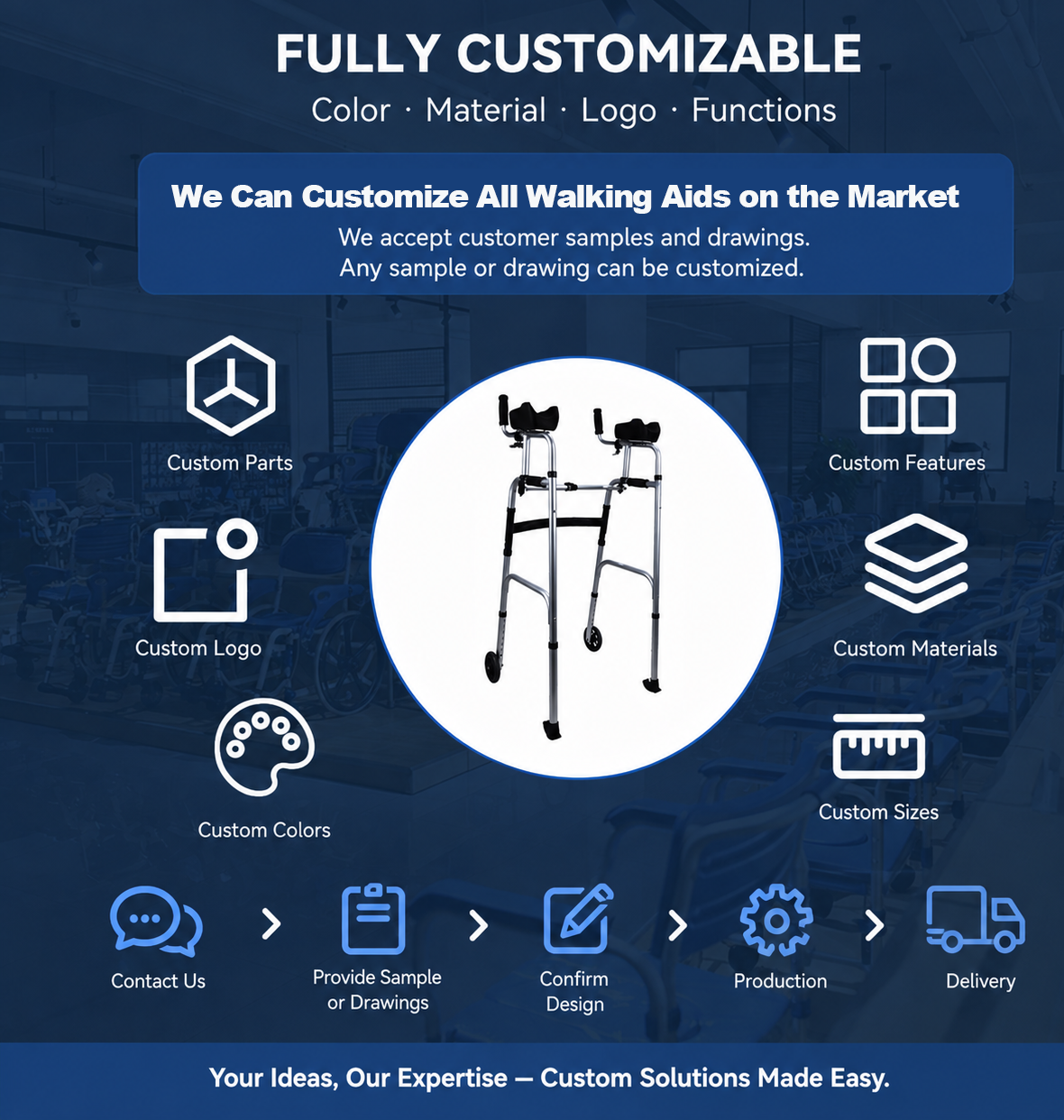
Different buyers require different levels of customization.
Standard Products
Standard configurations are suitable for buyers who prioritize faster product selection and straightforward bulk purchasing.
Private Label
Private label programs may involve customized logos, packaging, manuals, labels, colors, or other branding elements depending on the product.
Healthcare brands planning their own product lines can learn more from our Private Label Commode Chair Solutions for Healthcare Brands, where we explain the broader private label manufacturing process used for rehabilitation products.
OEM and ODM
OEM and ODM projects may involve deeper changes to materials, structure, components, dimensions, appearance, packaging, or other specifications depending on project feasibility.
Before beginning a customized project, buyers should clearly define:
- Target market
- Sales channel
- Expected order volume
- Required specifications
- Branding requirements
- Packaging requirements
- Compliance requirements
- Target positioning
This allows the manufacturer to evaluate whether an existing model, private label solution, or customized development approach is more appropriate.
10. How to Evaluate a Walking Cane Manufacturer
Price should be part of supplier evaluation, but it should not be the only criterion.
For long-term purchasing programs, buyers should also examine whether the supplier can consistently reproduce the approved product.
Important questions include:
- Is the supplier a manufacturer or trading company?
- What walking cane categories does the factory produce?
- How are incoming materials inspected?
- How are adjustment mechanisms checked?
- How is batch consistency controlled?
- Can samples be supplied before bulk purchasing?
- What OEM and private label options are available?
- Can packaging be customized?
- How are finished products inspected?
- Can the supplier support repeat orders and long-term programs?
Buyers comparing factories can refer to our How to Choose a Commode Chair Manufacturer guide for a more detailed framework covering manufacturing capability, quality systems, OEM support, production capacity, and supplier evaluation.
It is also useful to understand the differences between an OEM manufacturer and a trading company before establishing a long-term sourcing relationship.
11. Building a Walking Cane Product Portfolio for Your Market
For distributors, the objective should not simply be to find one walking cane at the lowest possible price.
A stronger strategy is to build a structured portfolio.
For example, a distributor might combine:
- An entry-level standard model
- A height-adjustable model
- A folding model for portability
- A quad cane for additional ground contact
- A differentiated model for private label or higher-value channels
The exact combination depends on the market.
Healthcare distributors should therefore discuss product positioning with the manufacturer before selecting models for bulk purchasing.
This approach can also be applied across a broader rehabilitation equipment portfolio containing commode chairs, shower chairs, patient transfer chairs, walkers, bedside safety products, and other mobility aids.
12. Why Manufacturer Expertise Matters Beyond Walking Canes
Many medical equipment distributors do not purchase walking canes as a standalone category.
They may also source bathroom safety products, toileting aids, mobility products, and patient transfer equipment.
Working with a manufacturer that understands multiple rehabilitation product categories can make it easier to evaluate product combinations, customization requirements, packaging, and long-term sourcing plans.
For importers and distributors developing a broader rehabilitation product range, our Commode Chair Sourcing Guide for Importers and Distributors explains how to evaluate products and suppliers from a professional purchasing perspective.
The same sourcing principles—product-market fit, manufacturing consistency, quality control, customization, packaging, and supply reliability—can be applied when evaluating walking cane programs.
Frequently Asked Questions
What should distributors look for in a walking cane manufacturer?
Distributors should evaluate product range, materials, adjustment mechanisms, manufacturing consistency, quality control, packaging capability, customization options, sample support, and long-term supply capability rather than comparing unit price alone.
What types of walking canes are suitable for wholesale distribution?
The appropriate product mix depends on the target market. Adjustable, folding, quad, and standard walking canes can address different distribution channels and customer requirements.
Can walking canes be customized for private label brands?
Depending on the model and project requirements, customization may include logos, colors, packaging, labels, manuals, and other product specifications. More extensive OEM or ODM development should be evaluated according to project feasibility.
Can distributors order samples before bulk purchasing?
Sample evaluation is recommended before bulk purchasing because it allows buyers to verify construction, adjustment mechanisms, handles, cane tips, packaging, and overall product quality.
Why is packaging important when sourcing walking canes?
Packaging affects transportation, warehouse efficiency, retail presentation, e-commerce fulfillment, and brand positioning. Distributors should therefore evaluate packaging together with the product specification.
How should buyers compare walking cane suppliers?
Compare suppliers based on manufacturing capability, product consistency, quality control, customization support, communication, packaging, lead time, and ability to support repeat orders—not simply the lowest quotation.
Source Walking Canes for Your Distribution Market
Walking cane sourcing is ultimately about matching the right product, specification, packaging, and manufacturing solution to your market.
KDB Medical supports healthcare distributors, wholesalers, rehabilitation equipment suppliers, brands, e-commerce businesses, and project buyers with rehabilitation and homecare product manufacturing solutions.
Contact us today to request walking cane specifications, product catalogs, wholesale pricing, private label options, OEM/ODM customization, or a customized solution for your market.